
CAPIS is now officially open—bridging knowledge, technology, and industry.
Center for Advanced Polymer & Industrial Solutions
CAPIS was established through collaboration between Vulkan Industrial Group and Islamic Azad University, Najafabad. The starting point was the gap between real production needs and available scientific expertise: how can knowledge and experience become a solution that industry can use?
Vulkan funded the establishment and equipping of the centre and provided its industrial setting. The university contributes academic and research expertise. Locating the centre within industry was intended to bring researchers closer to operating conditions and production constraints.
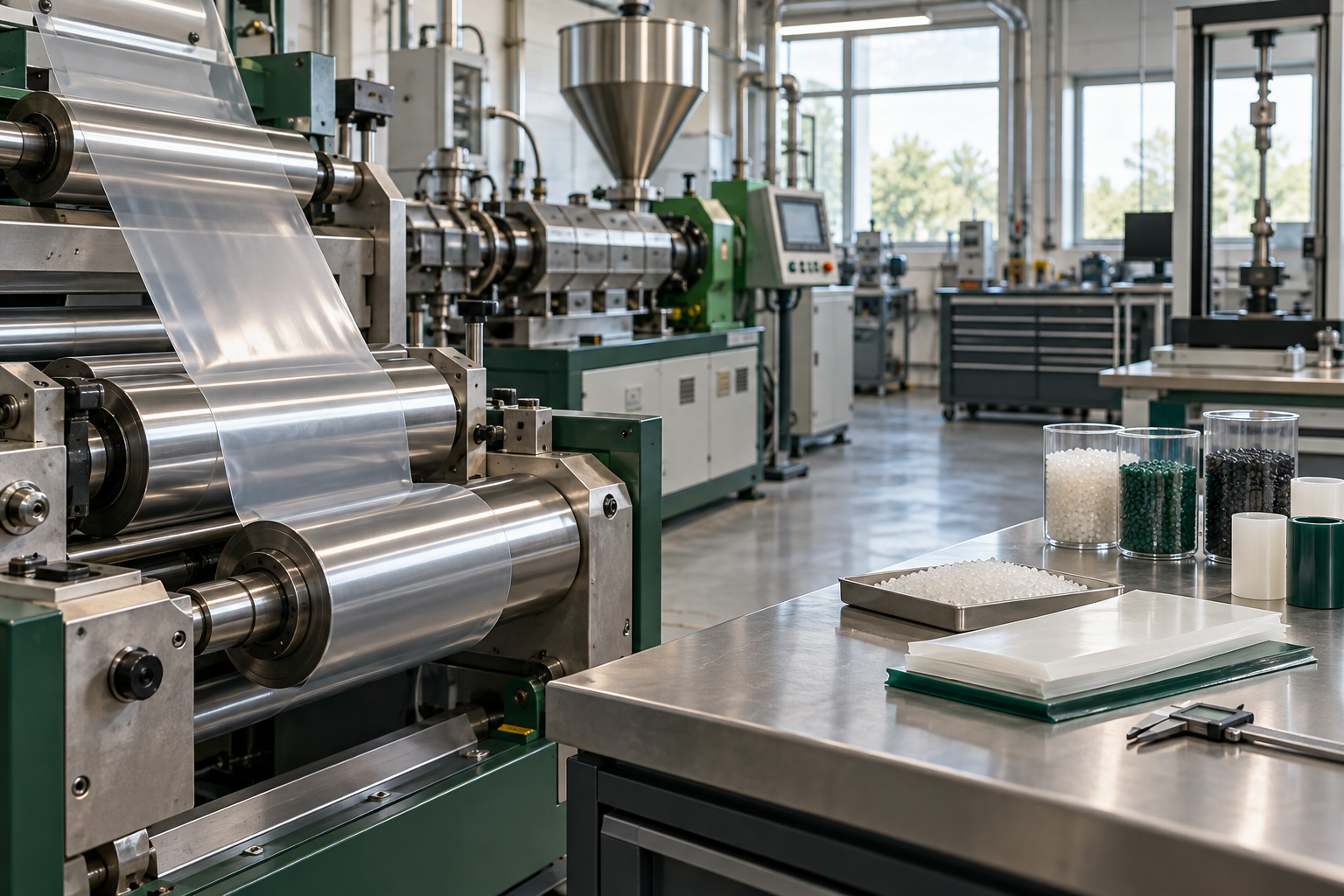
CAPIS was established through collaboration between Volkan Industrial Group and Islamic Azad University, Najafabad. The starting point was the gap between real production needs and available scientific expertise: how can knowledge and experience become a solution that industry can use?
Volkan funded the establishment and equipping of the centre and provided its industrial setting. The university contributes academic and research expertise. Locating the centre within industry was intended to bring researchers closer to operating conditions and production constraints.
Iran’s polymer, rubber and elastomer sectors have strong scientific and technical capacity, yet value is often lost between universities, applied research, technology development, manufacturing and the market. CAPIS connects these stages into one continuous chain so industrial problems are defined with real production constraints and carried through validation and transfer.
Work starts with a real production, quality, formulation, performance or localization need—not with a pre-written research title.
Problem framing, experiment design, formulation, prototyping, validation and industrial transfer remain connected in one traceable path.
Decisions are grounded in evidence and testing, while confidentiality, timing, documentation and practical implementation are built into every project.
CAPIS connects academic knowledge in polymers, rubber and elastomers to the operating reality of production—from precise problem definition to solution design, testing, validation and transfer.
We aim to become a reference point for complex materials, process and performance challenges—where industry can expect measurable answers and solutions designed for implementation.
CAPIS focuses on the points where materials science must become an engineering decision and, ultimately, an industrial result.
Design, optimization and selection of materials, formulations and polymer systems for target performance.
Performance analysis, formulation, testing and solution development for elastomeric parts and systems.
Root-cause investigation of recurring defects, instability, quality loss and production-process problems.
Support for material and technology substitution, reduced dependency and development of manufacturable products or processes.
The logic behind CAPIS is straightforward: many industrial problems cannot be solved by a single laboratory experiment or a short-term adjustment on the production line. Durable solutions emerge when problem definition, materials knowledge, experimental design, manufacturing experience and economic reality are considered together.
CAPIS exists to create that continuity: a shared space between university and industry that follows research beyond a scientific result toward something that can be implemented, transferred and repeated in production.
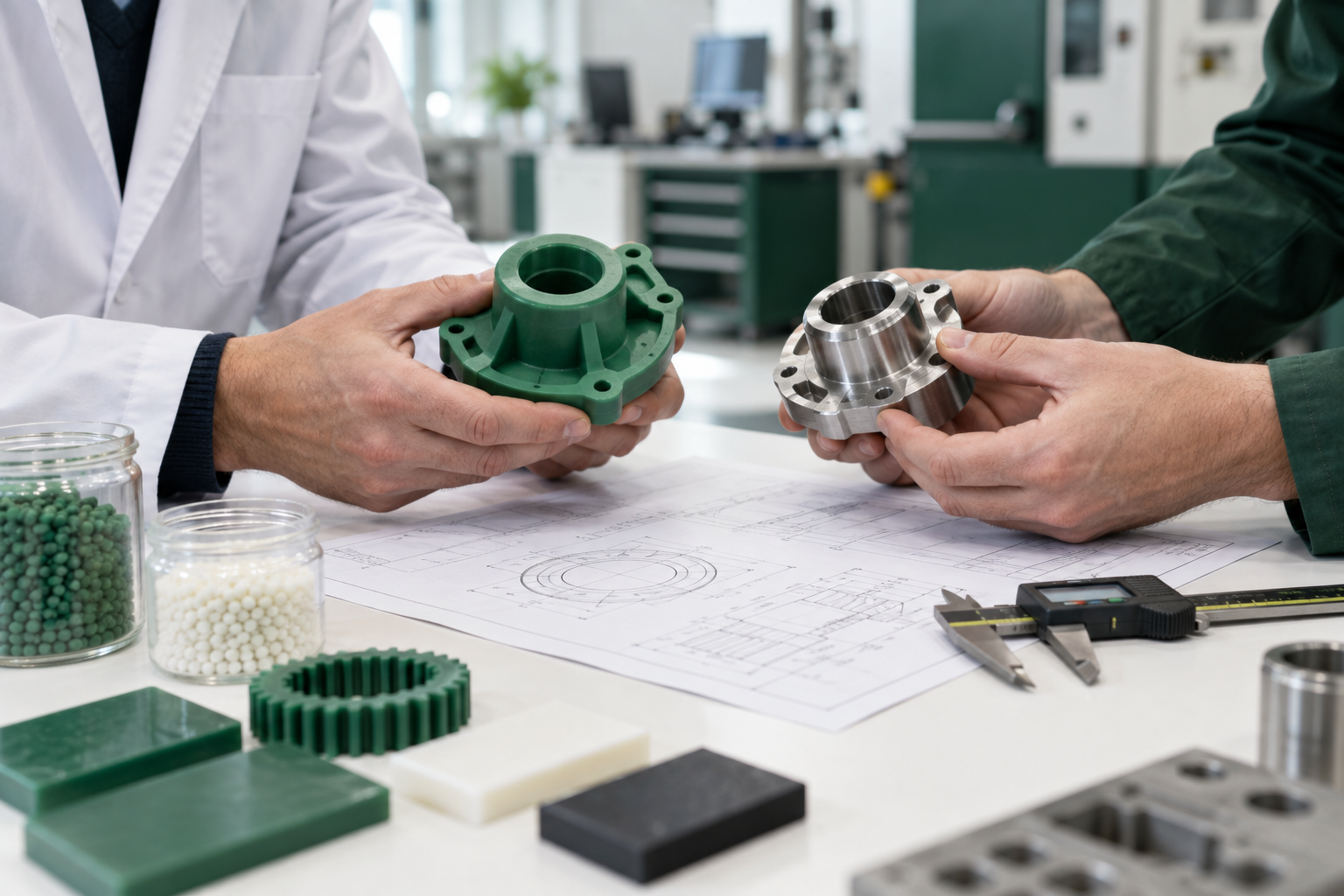
The logic behind CAPIS is straightforward: many industrial problems cannot be solved by a single laboratory experiment or a short-term adjustment on the production line. Durable solutions emerge when problem definition, materials knowledge, experimental design, manufacturing experience and economic reality are considered together.
CAPIS exists to create that continuity: a shared space between university and industry that follows research beyond a scientific result toward something that can be implemented, transferred and repeated in production.
Each engagement follows a transparent path with explicit decision points and measurable outputs, keeping research and implementation connected.
Define the problem, constraints, available data and measurable acceptance criteria before development begins.
Build hypotheses, test methods, material choices, samples and decision points around the industrial reality.
Evaluate, refine and test the solution at an appropriate scale against technical, performance and operational criteria.
Deliver knowledge and results in a documented, usable form so industrial execution can be repeated and tracked.
No project begins before the problem and acceptance criteria are clearly defined.
Every conclusion should connect to data, valid testing and traceable reporting.
Industrial data, formulations and know-how are treated as part of the project’s professional trust.
The work does not end in the lab; it continues until the result can inform an industrial decision.
Academic and research infrastructure, laboratory capability and scientific expertise in polymer and materials engineering.
Hands-on industrial experience in materials and polymer-related industries, with direct access to real production challenges.
info
info
info
Share your technical challenge, production issue, or research requirement with CAPIS. Our team combines polymer engineering expertise, advanced research infrastructure, and hands-on industrial experience to evaluate your challenge and recommend the most effective path for analysis, technology development, and implementation.
All requests are submitted and managed with complete confidentiality.