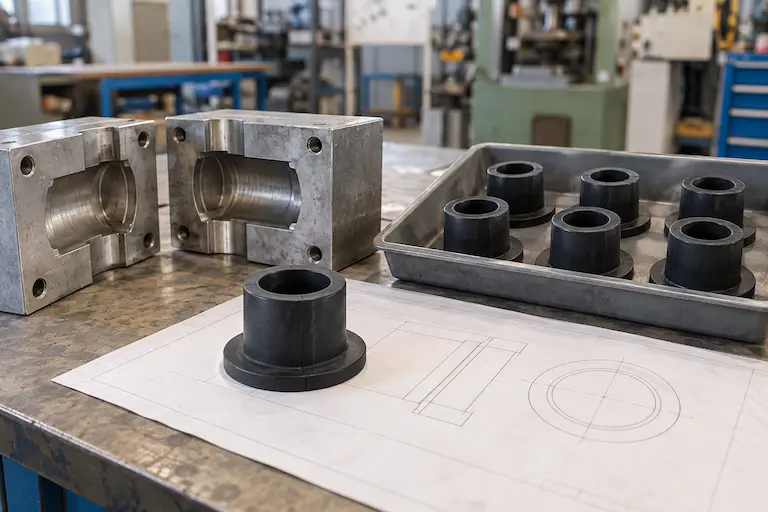
Polymer technology commercialisation begins with understanding a problem and its intended user. A research outcome can move towards industrial application when, alongside scientific validity, it provides a clear response to a manufacturer’s or user’s needs.
In CAPIS’s approach, market considerations are not postponed until research is complete. From the initial definition of a problem, it should be clear who needs the solution, what value it would create and what constraints affect its manufacture and use.
Real Needs as the Basis for Research
Scientific interest alone is not enough to bring a project into industrial use. A research topic must connect with a specific problem and a potential application for its outcome.
The initial questions are therefore important: What does the user need? What limitations does the existing solution present? What outcome is required, and what value would achieving it create for the industrial organisation?
Answering these questions helps establish a clear research objective. A scientific publication can be a valuable outcome, but it does not replace an assessment of the result’s application and value to industry.
Complementary Roles for Universities, Industry and the Market
In the model envisaged for CAPIS, universities, industry and the market have complementary roles. Universities contribute scientific knowledge, research methods and analytical capabilities. Industry contributes problems, practical experience, data and an understanding of production constraints.
The market indicates whether a solution offers value to users and is acceptable to them. Manufacturing feasibility, cost and customer needs must therefore be examined alongside technical development.
Industrial collaboration involves more than funding. Knowledge of raw materials, machinery, quality control and operating conditions can inform research decisions and help reduce the distance between laboratory results and real requirements.
From a Laboratory Sample to Reliable Production
A sample that performs well in a laboratory is not necessarily ready for industrial production. At manufacturing scale, raw material supply, consistent quality, production capabilities and cost become important considerations.
Four central questions feature in the approach outlined for CAPIS:
- Does the solution deliver the required performance?
- Can it be manufactured with consistent quality?
- Is it economically viable?
- Does the market need and accept it?
These questions must be considered together. Technical success without manufacturing feasibility or user acceptance is not sufficient to achieve commercialisation.
Technical Know-How and Engineering Services in Market Development
Commercialisation opportunities extend beyond selling a physical product. Technical know-how and engineering services can also form the basis of collaboration and market development.
The vision discussed for CAPIS places importance on connecting technology with domestic and international markets. Turning this potential into an economic partnership, however, depends on technological maturity, documented knowledge and an understanding of the other party’s needs. This ambition does not establish that technology exports or specific contracts have already been achieved.
Commercialisation Requires Assessment
In CAPIS’s intended approach, research should consider practical application and value creation from the outset. Its commercial outcome, however, cannot be guaranteed in advance.
Recording tests, modifications and unsuccessful results is also part of developing technical know-how. This documentation supports better-informed decisions about whether to continue, revise or stop a development pathway.
If you have an industrial need or a technology idea, describing the intended application, user and current constraints can provide a starting point for a discussion with CAPIS.