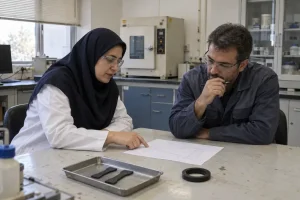
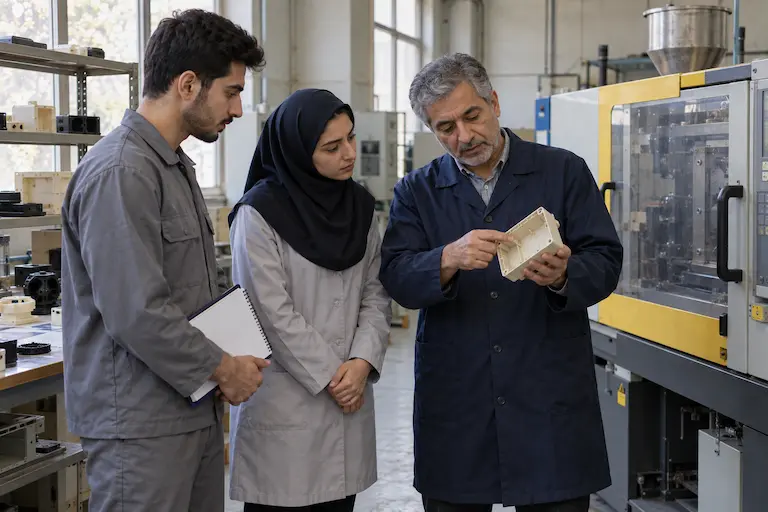
Skills development in the polymer industry connects with university education when students have opportunities to examine real problems and understand the conditions in which their knowledge will be applied. Scientific learning is then accompanied by research experience and familiarity with production environments.
One of CAPIS’s objectives is to enable students to participate in industrial research under academic supervision. Collaboration between Islamic Azad University, Najafabad, and Vulkan Industrial Group provides a basis for pursuing this objective and bringing education and research closer to industrial needs.
Industrial Problems as a Context for Learning
In research connected with industry, a topic is not defined solely to complete an educational activity. The problem should have an identifiable user, and the outcome should be capable of addressing a real need.
This connection helps students examine a scientific topic alongside the conditions of its application. Understanding a need, formulating a research question and evaluating the outcome are experiences that can bring academic learning closer to practical problem-solving.
CAPIS’s approach aims to connect theses and research activities with products or solutions needed by industry, alongside their scientific value.
Academic Supervision and Student Participation
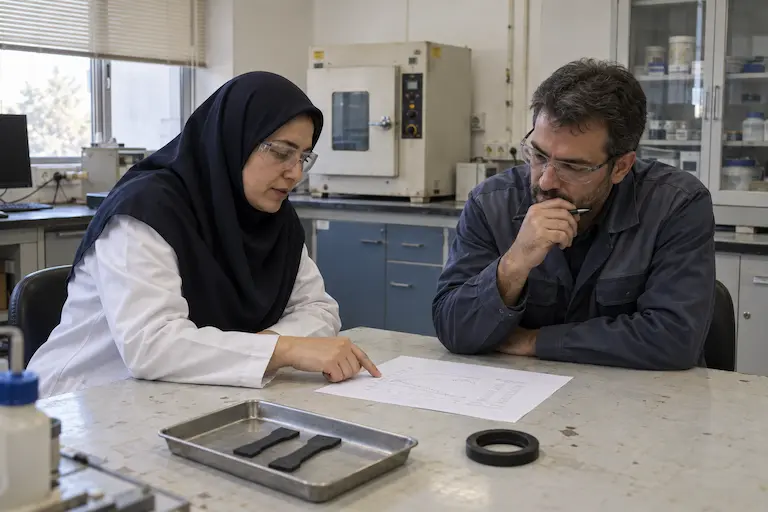
In the structure outlined for CAPIS, academics are responsible for leading projects, with postgraduate student participation envisaged alongside them.
This model places learning within a supervised research activity. With academic support and a connection to an industrial need, students have an opportunity to apply their specialist knowledge to investigating and addressing a problem.
The Manufacturing Engineering and Polymer Chemistry research groups form the centre’s disciplinary framework. Under the announced plan, project teams are intended to develop around specific projects and the expertise they require. Team composition will therefore depend on the nature of the problem.
Bringing Industrial Experience into Education
University–industry collaboration creates opportunities to bring production experience into learning. Discussions with industrial practitioners can provide a clearer understanding of how knowledge is applied and what the workplace requires.
The educational direction outlined by Islamic Azad University, Najafabad, places importance on industrial practitioners’ involvement in university life and on connecting education with the needs of society and industry. CAPIS was established within this broader approach, bringing academic capabilities and industrial experience together around shared problems.
This connection complements theoretical education by helping students understand its applications and the questions that arise in real production environments.
Developing Skills while Working towards an Outcome
Within CAPIS’s problem-led approach, a research outcome may be a physical product or a technical, strategic or managerial solution. The appropriate output depends on the problem defined at the outset.
For students, participation offers an opportunity to understand the relationship between a scientific question, a user’s need and a usable outcome. Learning is not limited to reaching a final answer: examining the approach, analysing results and refining methods are also part of the experience.
A Basis for Research Participation
Student participation in projects and stronger links between education and industrial environments are among CAPIS’s announced objectives. Achieving them will depend on suitable projects, academic supervision and appropriate arrangements for collaboration.
Interested researchers and students can present their areas of expertise and research ideas for consideration against the centre’s objectives. The scope of any collaboration should be defined in relation to industrial needs and the feasibility of pursuing the research.